

Understanding Load-Bearing Walls
Understanding Load-Bearing Walls
Updated:
Learn how to safely remove a load-bearing wall to create open-plan spaces with the help of structural engineering.
Learn how to safely remove a load-bearing wall to create open-plan spaces with the help of structural engineering.

If you’re planning to create an open-plan space or add an extension to your home, you’ve likely come across the term “load-bearing wall.” While it might sound intimidating, understanding what a load-bearing wall is and how to deal with it can make your renovation process much smoother. In this article, we’ll break down the concept of load-bearing walls, remove some common fears, and give you a clear idea of what steps to take when working with one.
What is a Load-Bearing Wall?
In simple terms, a load-bearing wall is a wall that supports the weight—or load—of the structure above it, such as the roof, ceiling, or upper floors. Think of it like a tower of cards: if you remove a crucial card (or in this case, a wall), the structure weakens and could collapse.
However, this doesn’t mean you can’t remove a load-bearing wall. The solution is to replace it with a supporting beam that will carry the weight instead.

The Role of a Structural Engineer
Before removing a load-bearing wall, a structural engineer must get involved. The engineer will calculate the weight the wall is carrying and design a support structure, typically a steel beam, that can safely take over the load.
Depending on your layout, this beam will either rest on adjacent walls or stand on supporting legs. These beams can be left exposed for an industrial look, covered up for a more seamless appearance, or hidden behind new ceilings or walls.

What Happens When Beams Need Support
In cases where the steel legs supporting the beam can’t be flush with the wall, you might have a small protrusion in the space where the original wall stood. While this can slightly alter the room’s appearance, it is usually a minor issue that can be integrated into the design.

How to Identify a Load-Bearing Wall
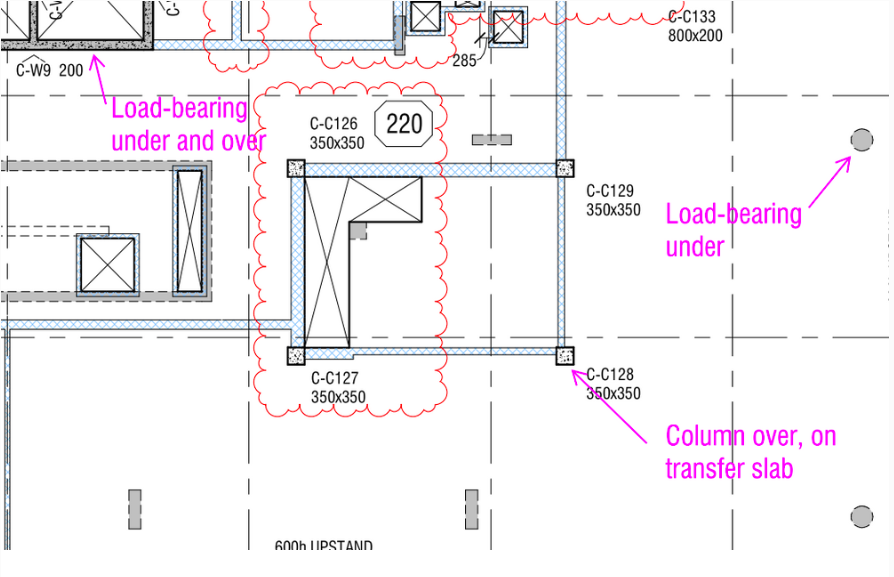
To the trained eye, load-bearing walls are easy to spot in a building’s structural drawings. If you don’t have access to those, you can often tell if a wall is load-bearing by tapping on it—solid walls tend to sound different from hollow ones. However, the best approach is to consult with a builder, surveyor, or structural engineer to confirm whether a wall is load-bearing before making any changes.
The Technical and Financial Impact
If you discover that one of the walls you want to remove is load-bearing, don’t worry—this is mostly a technical and financial consideration. In almost every case, a structural engineer can design a solution that allows you to move forward with your renovation. Be prepared for additional costs, though, as adding a support beam can increase the overall budget of your project.

Key Considerations for Removing a Load-Bearing Wall
Always ensure you work with a certified structural engineer and hire a builder with the skills and experience to execute the supporting structure properly. Removing a load-bearing wall is a significant task, but with the right team, it can be done safely and efficiently, ensuring your design vision becomes a reality.

Proceed with Confidence
While the idea of removing a load-bearing wall might seem daunting, it’s a common and manageable part of many home renovations. With the support of a skilled structural engineer and a qualified builder, you can create the open, flowing space you’ve been dreaming of without compromising the safety of your home.